Aviation Electronics and Components
There is no compromise in the manufacture and testing of reliable and robust onboard equipment. Aerospace equipment must demonstrate dependability with enough safety margin through a range of environments. Most important of those are the electromagnetic and physical environments and the standards driving those tests.
Elite is equipped for the challenge of aviation qualification testing. Our impressive array of equipment, facilities, and test experts are in place to perform nearly all RTCA-DO-160 tests. Elite is the laboratory of choice for one-stop bundled testing services, saving time and program costs. Aviation testing is best done by the most experienced and capable labs. You can trust Elite to get your testing done accurately and efficiently.
EMC, Electrical, and Environmental Stress Testing on one campus
- Elite provides one-stop for MIL-STD-461, DO-160, Boeing, Airbus, and others
- High Power Tests readily available
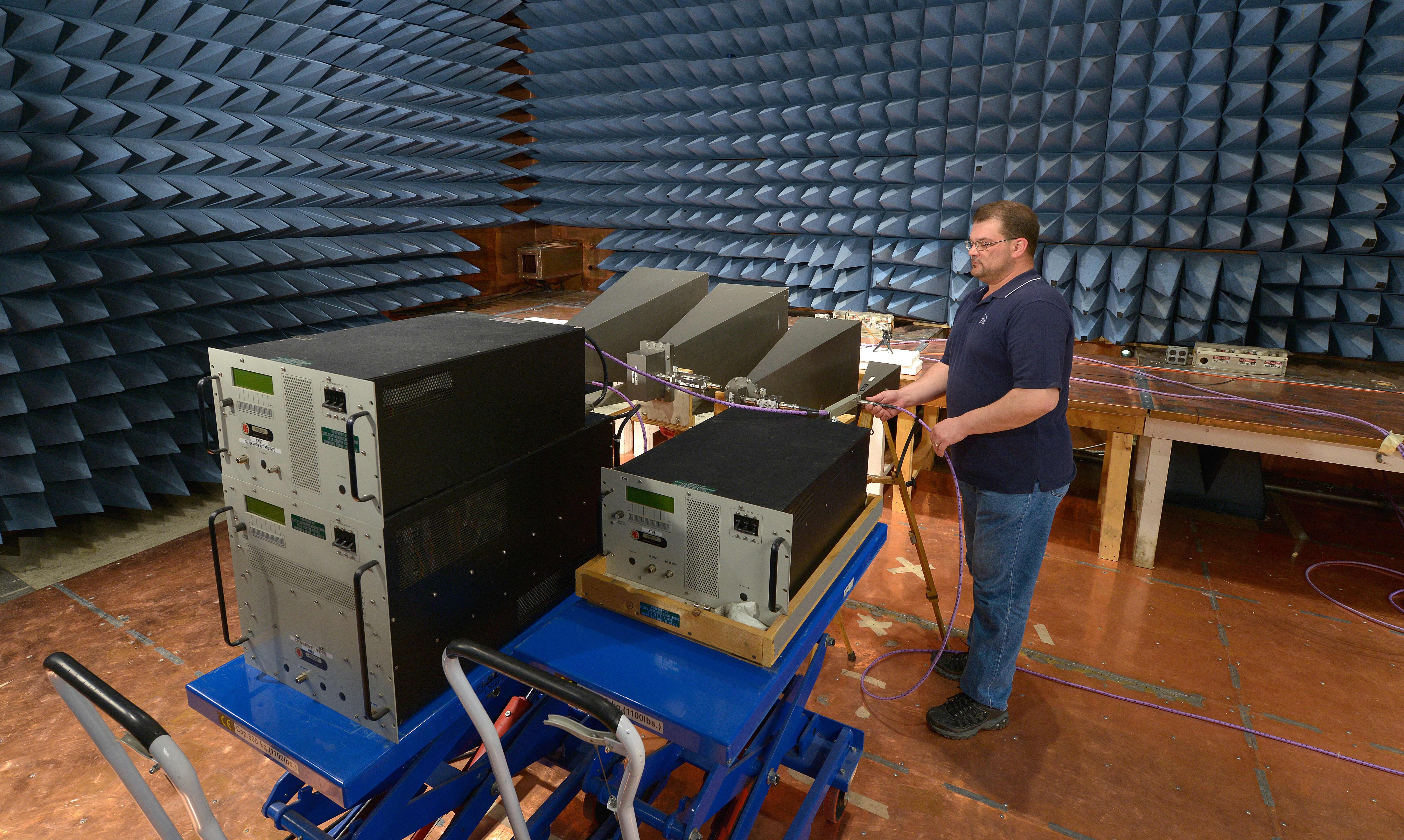
- 200V/m and higher radiated susceptibility
- High-Intensity Radiated Field (HIRF) radar pulse testing up to 4,000V/m
- Lightning tests, per RTCA DO-160 Sec 22 (All waveforms at Level 5)
- All supported by more than 65 years of EMC expertise
- Vibration and Shock Testing for modules and complete systems
- Temperature, Humidity, and Altitude Testing in one location
Space Electronics and Components
If your product is going to space, Elite can help you get it there. Elite understands the range of aerospace components. Experience counts: One of Elite’s first projects in the mid-1950s was testing and developing RF immunity protection for high-altitude aircraft devices.
Whether it’s testing a Low Earth Orbit Satellite component, running “Lunar Dust” in our Blowing Dust machine, or performing a combined temperature and vibration test, Elite can support space industry testing needs.
Space-bound devices include:
- Monitoring systems
- Sensors
- Fuel systems
- Filters
- Avionics boxes
- Power sources
- LED lights for spacecraft
- Solenoid assemblies
- Electronic instruments
- Guidance systems
- Cable harness for space station applications
- Propulsion components for spacecraft
Aerospace Industry Standards
Elite’s vibration, shock, and high-G shaker testing equipment can confirm your product’s compliance with MIL-STD requirements:
- MIL-STD-810 Environmental Stress Testing
- MIL-STD-883 Mechanical Shock and Vibration Testing
- MIL-STD-202 Environmental, Shock and Vibration Testing
- EIA-364 Environmental Stress Testing of Electrical Connectors
- MIL-PRF-15305 Vibration Testing
- NASA-STD-7001B
Elite is also uniquely qualified to perform EMC testing on space system equipment according to MIL-STD-461G and any unique requirements specified by the manufacturer.
MIL-STD-461G is a military standard for the control of electromagnetic interference (EMI), covering a wide range of equipment that includes ground, aircraft, and space vehicles. MIL-STD-461G identifies levels of conducted emissions (CE), conducted susceptibility (CS), radiated emissions (RE), and radiated susceptibility (RS) for different equipment categories.
Elite’s expert staff can guide you through the requirements that apply to your product and help set up the tests to get that product on the market. Contact Elite to identify the tests your device needs to meet critical aerospace standards.
Aerospace Testing Expertise and Accreditations
 Ask around — you’ll find that Elite’s expertise is well known and that our reports are highly regarded in the defense and aerospace industry. Supported by a group of iNARTE certified EMC Engineers, Elite’s lab facilities are accredited by industry agencies:
- ISO 17025 Accredited for MIL-STD-461, MIL-STD-810, MIL-STD-202, RTCA DO-160, and others.
- NVLAP (Testing Lab Code: 100278-0) and A2LA (Certificate #1786.01 and 1786.02) accredited for a wide range of services
- Elite values and encourages professional credentialing to ensure the level of expertise you need and expect and is an iNARTE Certified Organization